

Migrate Off Legacy Integrations Without Starting Over
Modernize your integration architecture with speed, simplicity, and enterprise-grade control. Migrate legacy integrations, ETL workflows, and middleware to a modern cloud integration platform to reduce cost, risk, and complexity.
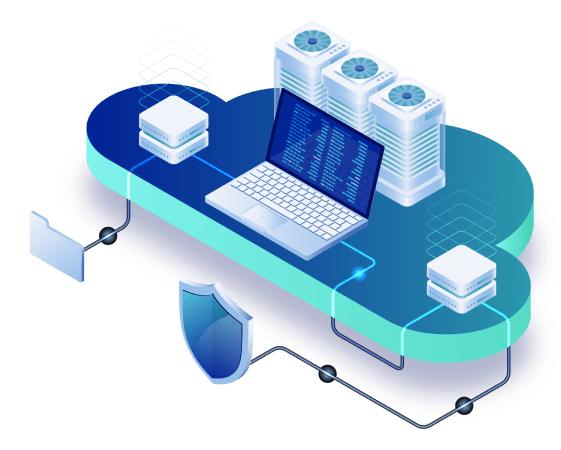
On average, businesses who modernized with SnapLogic’s Agentic Integration Platform see…
compression of integration pipelines
reduction in total cost of ownership
reduction in # of integrations and maintenance costs
Why should you modernize your legacy integration infrastructure?
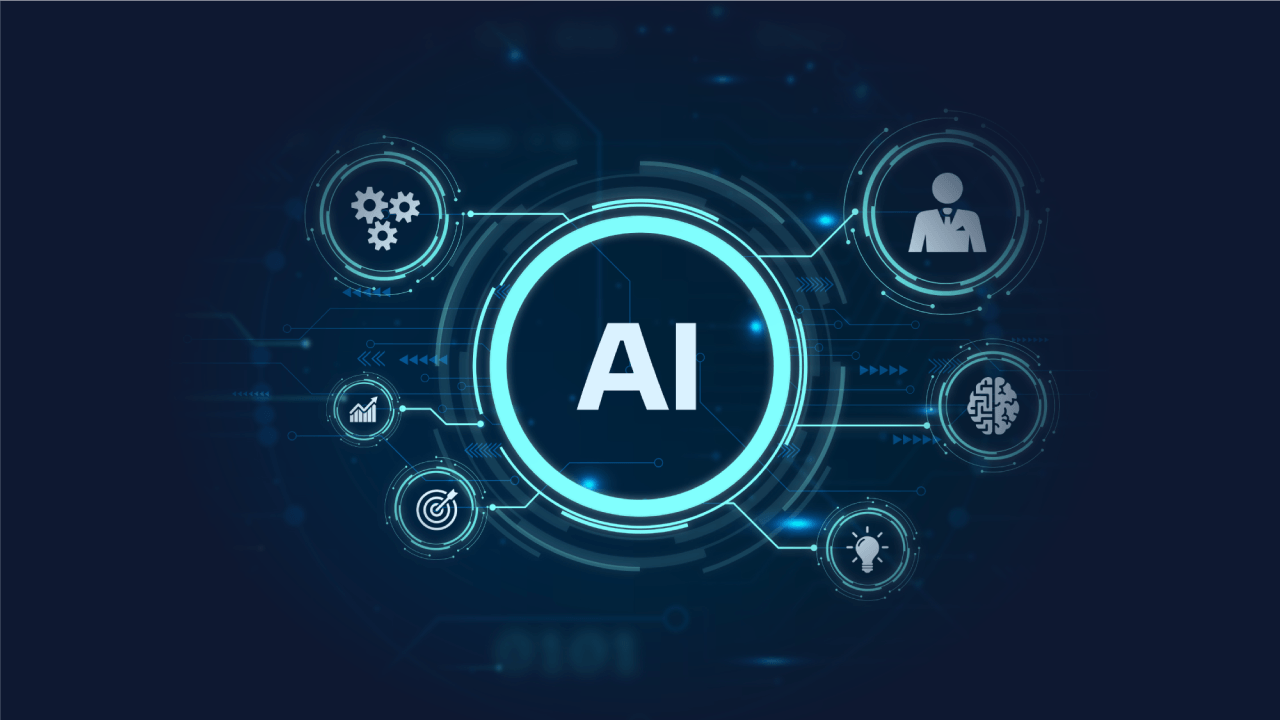
Connect your data to prep for GenAI
A cloud-born agentic integration tool helps you easily connect to cloud and on-premises applications and data, and build new Generative AI applications quickly. This agility enables enhanced customer service and employee experience, and new opportunities to deliver higher value.
Reduce cost and complexity
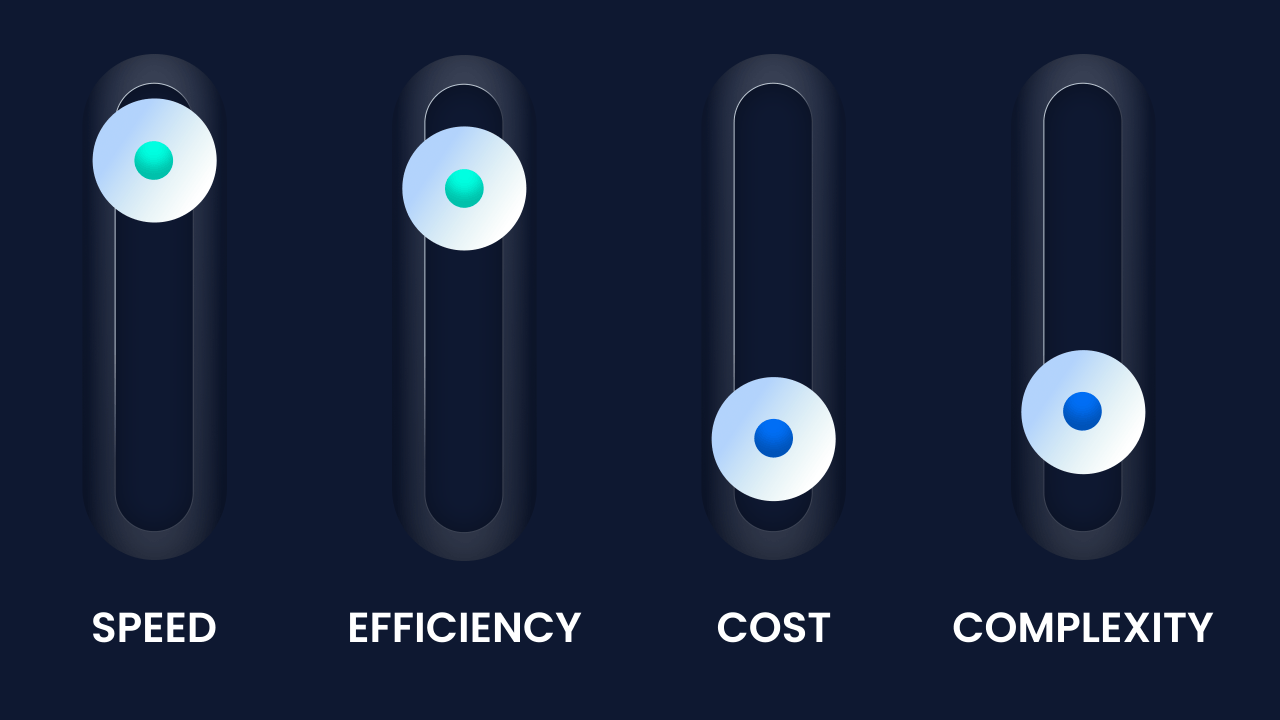
Maintaining legacy applications and integrations is expensive and can slow productivity and delay projects. Modernizing your applications and integrations can minimize complexity, reduce the cost and time spent associated with maintenance, and improve operational efficiencies.
Improve business agility
Relieve your IT experts by empowering non-technical users to build integrations and GenAI applications. Help reduce IT bottlenecks and get business results faster with a low/no-code platform that leverages GenAI, LLMs, and natural language processing.

See how these legacy platforms compare to SnapLogic’s Agentic Integration Platform

CASE STUDY
Reece’s Journey to Modernization Is Paved With SnapLogic’s Intelligent Integration
Our appetite for data has grown enormously as a business. And our expectations of everything being connected have also grown exponentially. The ability to share data seamlessly between different systems is a huge advantage for us.
Gabi Currin
Head of Business Systems at Reece

We are moving Yamaha IT away from an administration role to a business analyst role to deliver more value to the business. Modernizing and consolidating our integration infrastructure with SnapLogic enables us to do just that.
Matt Irey
VP of IT at Yamaha

CASE STUDY
Catalyzing Connectivity:
SnapLogic Fuels Rhodes College’s Workday Digital Transformation
The objective [of the migration] was to simplify the student experience while modernizing the underlying technology and making it more resilient. SnapLogic has been transformative, allowing us to tie very different systems together under the hood while still providing a consistent, easy experience to our students.
Stacy Pennington
Director of Infrastructure and Enterprise Applications at Rhodes College
Featured Legacy Modernization Resources


FAQs
Legacy integration migration is the process of moving your existing integrations, ETL workflows, and middleware off outdated on-premise or proprietary platforms and onto a modern cloud integration platform. As businesses scale, legacy systems become a bottleneck. expensive to maintain, difficult to extend, and increasingly incompatible with modern cloud applications and APIs. Modernizing your integration architecture frees your IT teams from firefighting and lets them focus on building integrations that actually move the business forward.
There are a few clear warning signs. If your team is spending more time maintaining existing integrations than building new ones, that’s a red flag. If your middleware platform is approaching end-of-life, lacks cloud-native support, or requires specialized skills that are increasingly hard to find, those are equally strong signals. Add in rising licensing costs, integration scalability issues that cap your growth, and an inability to support real-time or API-driven use cases, and the case for modernization becomes hard to ignore.
Yes, and this is one of the most common concerns we hear. A modern integration modernization platform provides pre-built connectors, reusable pipeline templates, and automated migration tooling that can map existing ETL logic to cloud-native equivalents. Rather than a full rewrite, teams can migrate in stages, validating each workflow before decommissioning the legacy equivalent. This dramatically reduces the risk and cost typically associated with ETL migration to the cloud.
An ESB (Enterprise Service Bus) was built for a world of monolithic, on-premise applications communicating over a single internal bus. When you migrate ESB to iPaaS, you’re not just swapping one tool for another; you’re adopting a fundamentally different architectural model. iPaaS platforms are cloud-native, API-first, and designed for distributed environments where data flows across SaaS apps, cloud data warehouses, on-premise systems, and everything in between. The result is an integration platform that’s faster to deploy, easier to govern, and built to scale with your business.
SnapLogic’s SLIM (SnapLogic Intelligent Modernizer) is purpose-built to accelerate legacy middleware replacement. SLIM gives teams a structured, repeatable approach to inventory existing integrations, assess complexity, prioritize migration waves, and execute the move to SnapLogic’s cloud-native platform, all while maintaining visibility and control throughout the process. It takes what is typically a chaotic, high-risk project and turns it into a managed, predictable program.
Additionally, one of our partners can join the conversation, evaluate the footprint of legacy systems, and help you estimate the timeline, resources, and costs needed to migrate off of the legacy platforms such as IBM DataStage, Informatica PowerCenter, MuleSoft, etc.
Complexity varies depending on the volume of integrations, the diversity of connected systems, and how well the existing architecture is documented. In practice, the biggest challenge is the lack of a complete inventory of what’s running and what it does. A phased cloud integration migration approach, starting with lower-complexity integrations and building confidence before tackling critical workflows, significantly reduces risk. The right tooling and methodology make the difference between a migration that drags on for years and one that delivers results in months.
The most frequently cited legacy integration challenges include brittle point-to-point connections that break whenever a source system changes, high integration maintenance costs driven by outdated and scarce skillsets, lack of reusability across teams, poor monitoring and visibility into what’s running, and an inability to support real-time data flows. Modern cloud integration platforms address all of these through a governed, API-driven architecture with built-in observability, reusable components, and self-service capabilities that reduce dependency on specialist integrators.
Not if it’s managed correctly. A hybrid integration migration approach allows legacy and modern systems to run in parallel during the transition period, so business operations continue uninterrupted while individual integrations are cut over. By migrating in prioritized waves (starting with lower-risk integrations and gradually moving to business-critical ones), teams can move at a pace that the business can absorb without disruption.
Beyond the platform itself, SnapLogic provides SLIM — a structured methodology and toolset for managing integration migrations end-to-end. Where other vendors hand you a platform and leave you to figure out the migration, SLIM gives you a reasoned, repeatable process: inventory, assess, prioritize, migrate, and validate. Combined with 1,000+ pre-built Snaps covering the most common enterprise applications and data sources, it means your team spends less time on plumbing and more time on value-generating work.
The ROI from legacy integration modernization comes from multiple directions. Direct cost savings come from eliminating expensive legacy platform licenses, reducing the specialist headcount required to maintain old middleware, and cutting the time it takes to build and deploy new integrations. Indirect value comes from increased agility; teams that can deliver integrations in days rather than months move faster on product launches, mergers and acquisitions, and customer-facing initiatives. Organizations that have made the move typically report significant reductions in integration maintenance costs alongside a measurable increase in integration delivery speed.